
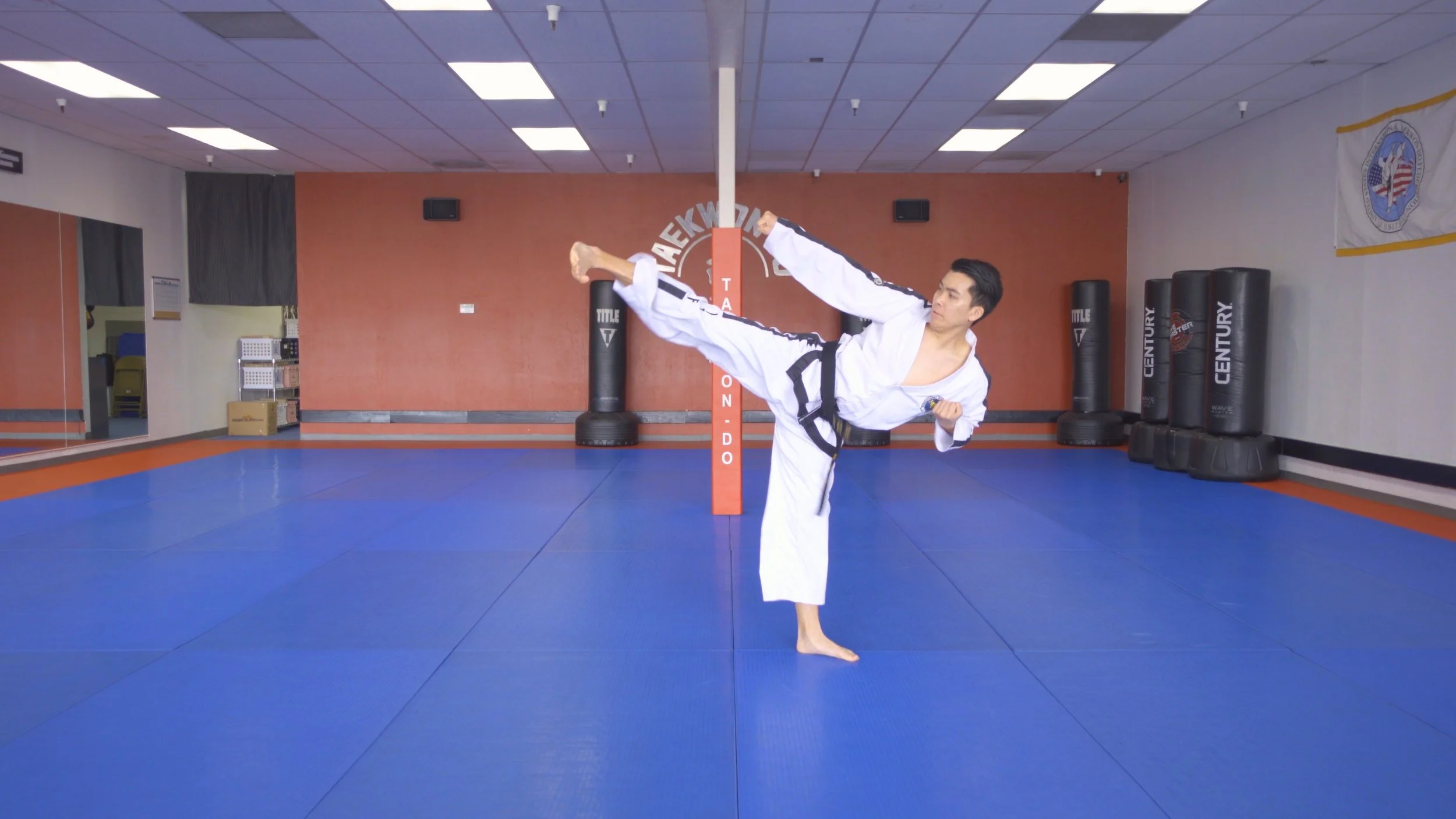
Piercing Kick (Cha Jirugi)
Both the theory and purpose of this technique are very similar to those of a punch, and consists of side and back piercing kick.
Side Piercing Kick (Yopcha Jirugi)
Without a doubt, this is one of the most effective techniques for attacking an opponent at the flank. The footsword is employed as an attacking tool against the temple, armpit, floating ribs, and neck artery. The philtrum, point of the chin, and solar plexus are secondary targets.
This technique is broken down into low, middle, and high side piercing kicks.
Basic principles to be observed:
The attacking tool must reach the target in a straight line with a revolving motion.
Regardless of the stance, the footsword must be brought to the inner knee joint of the stationary leg prior to delivering the kick.
Keep the toes of the kicking foot faced slightly downwards and the toes of the stationary foot pointed about 75 degrees outwards at the moment of impact.
For the maximum height, lean the body away from the kick as far as possible while still maintaining the balance.
Do not attempt to kick diagonally since this is a waste of power.
Unless advised otherwise by an instructor, execute a high punch using a right fist with a right foot and vice versa.
The stationary foot pivots allowing the hip to rotate with the kick.
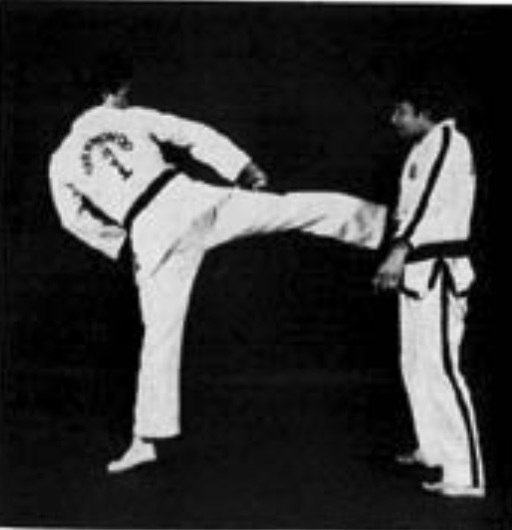
Correct
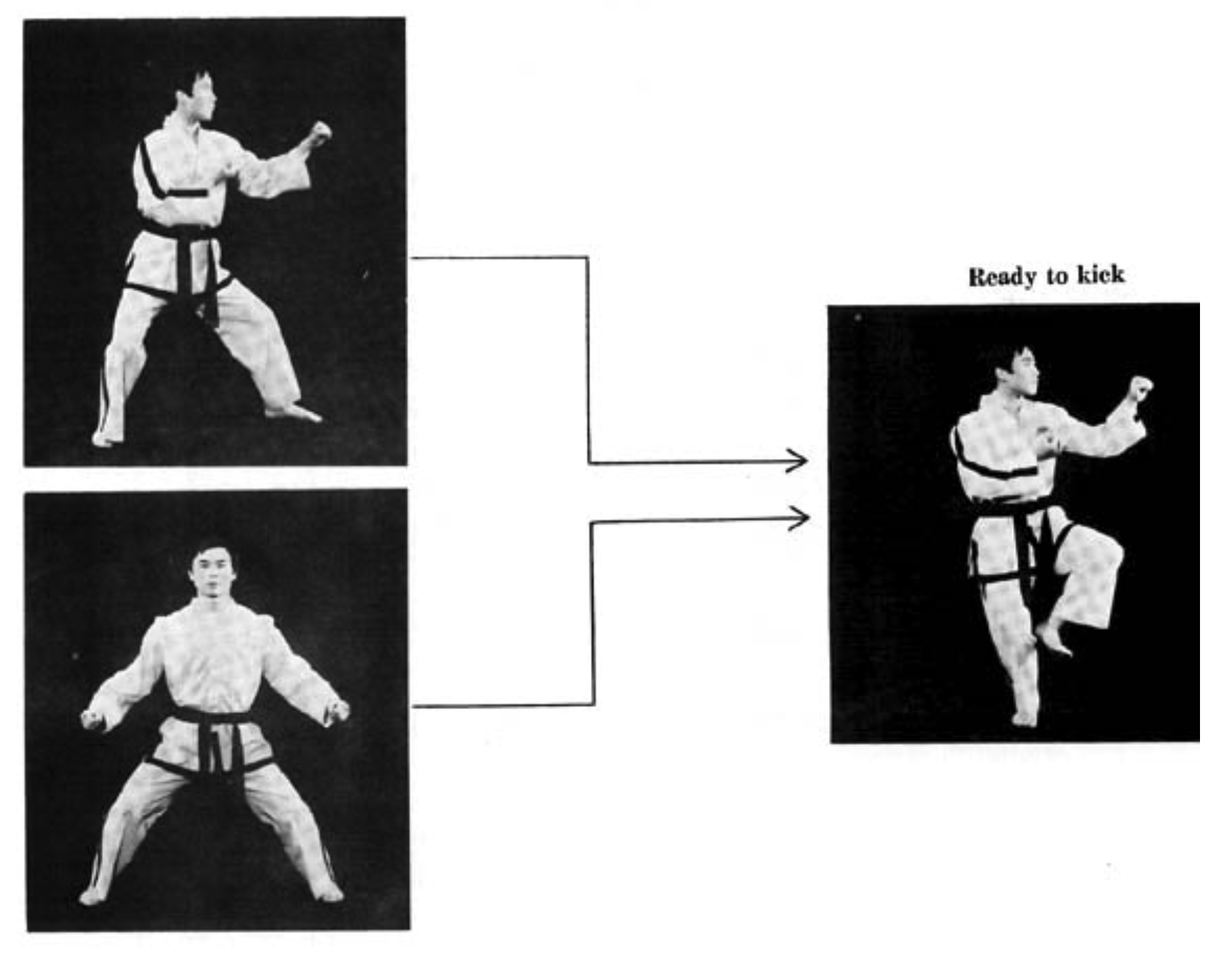
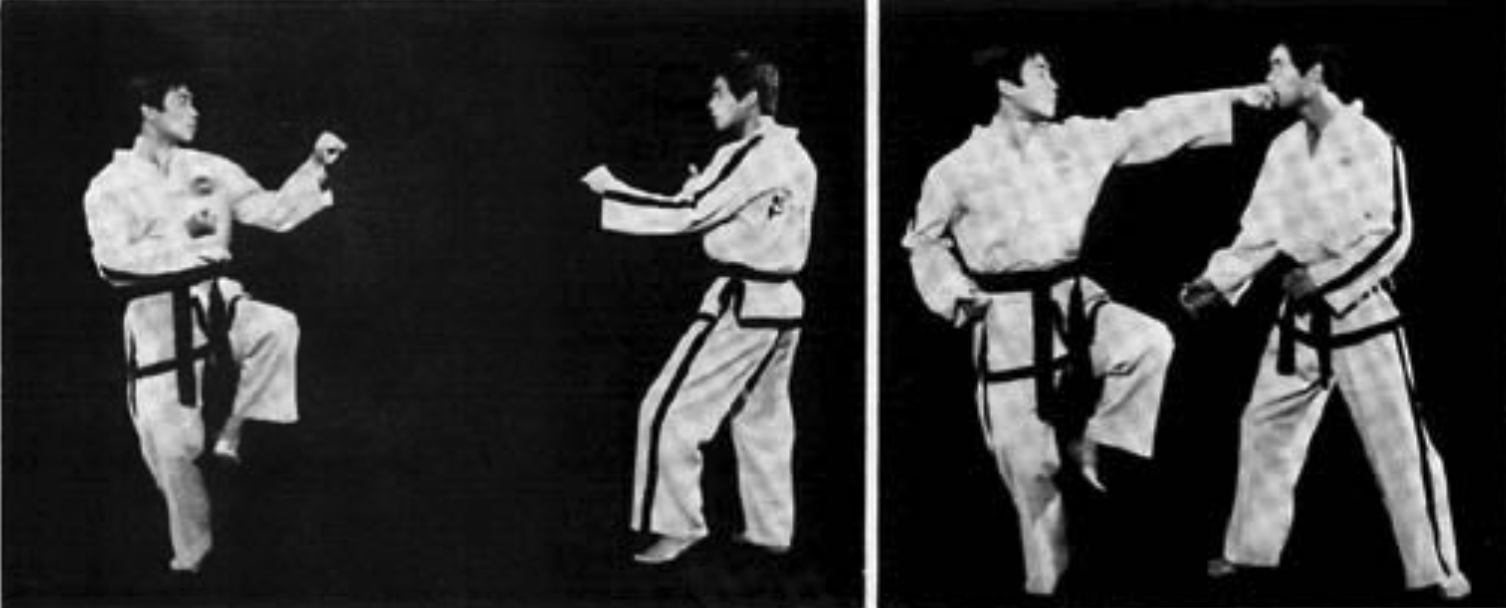
If the defender (right) blocks the kicking foot, then the attacker delivers a high punch.
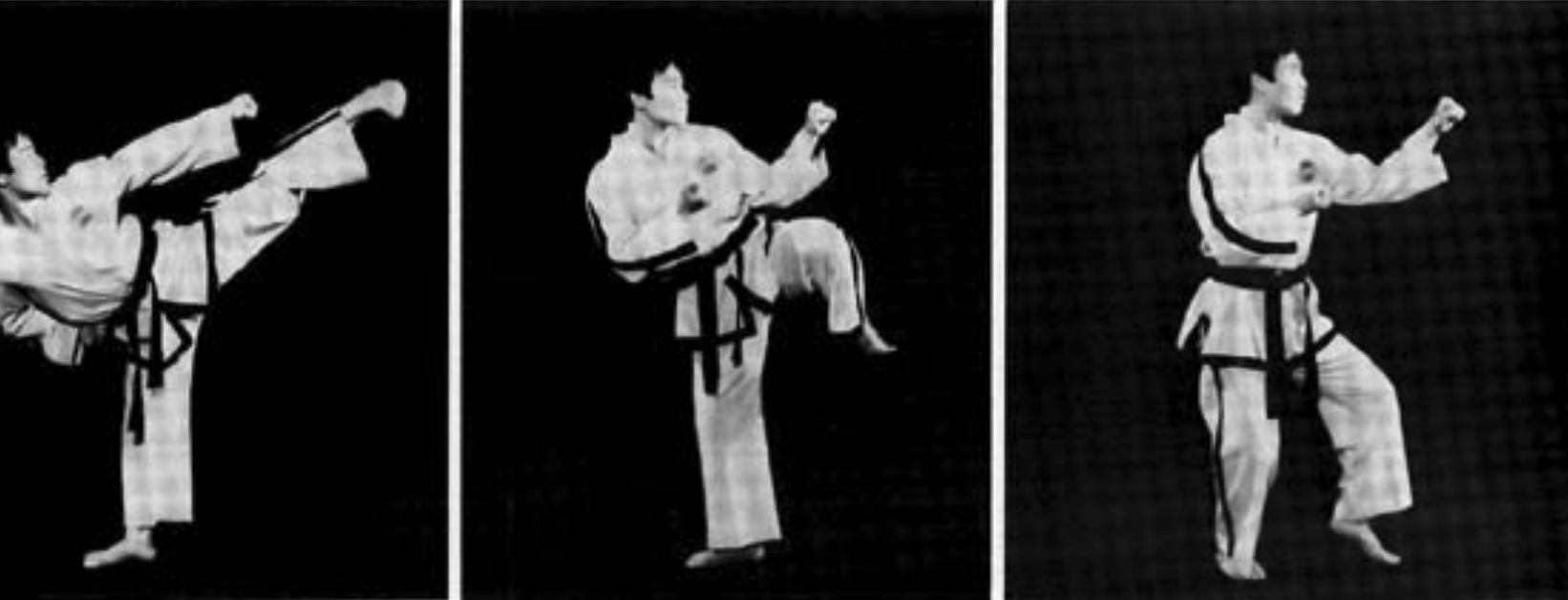
Kicking —> Withdrawing
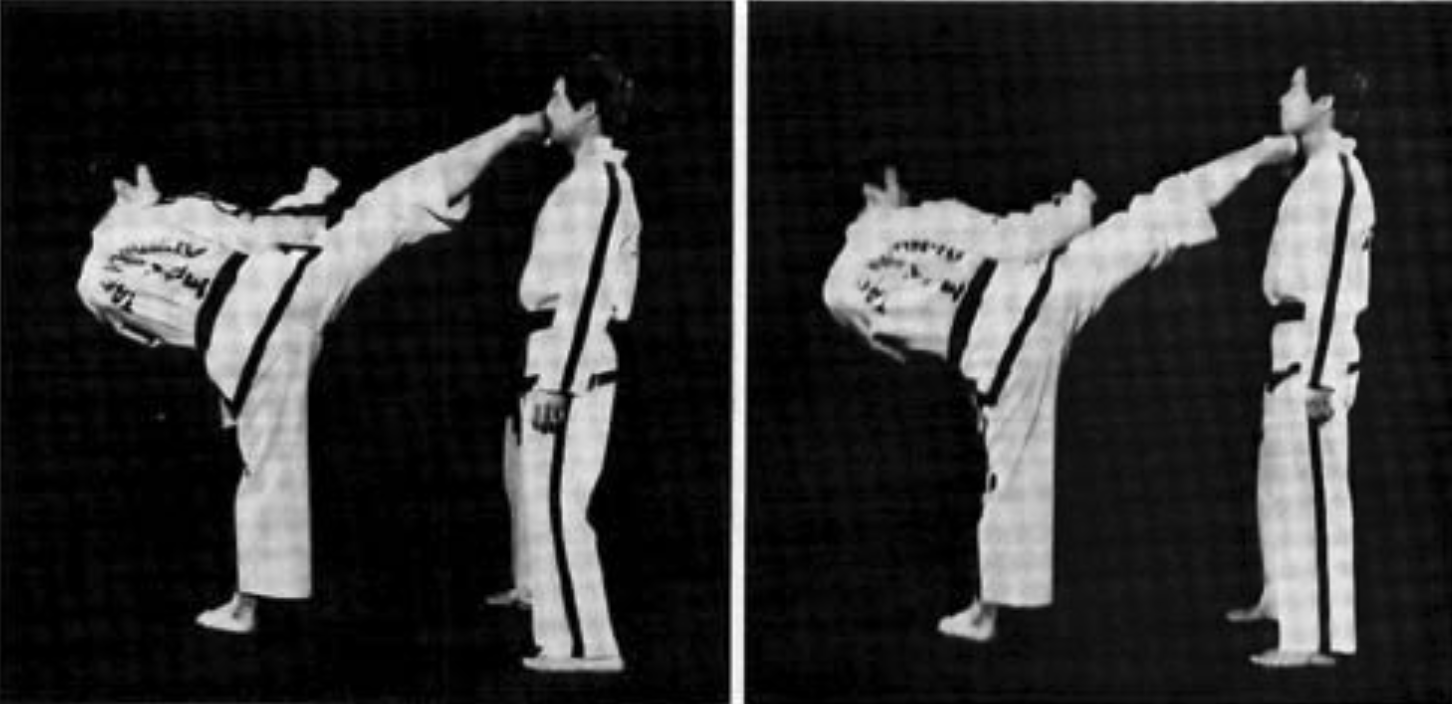
Double Side Piercing Kick
Only vertical kick is possible.
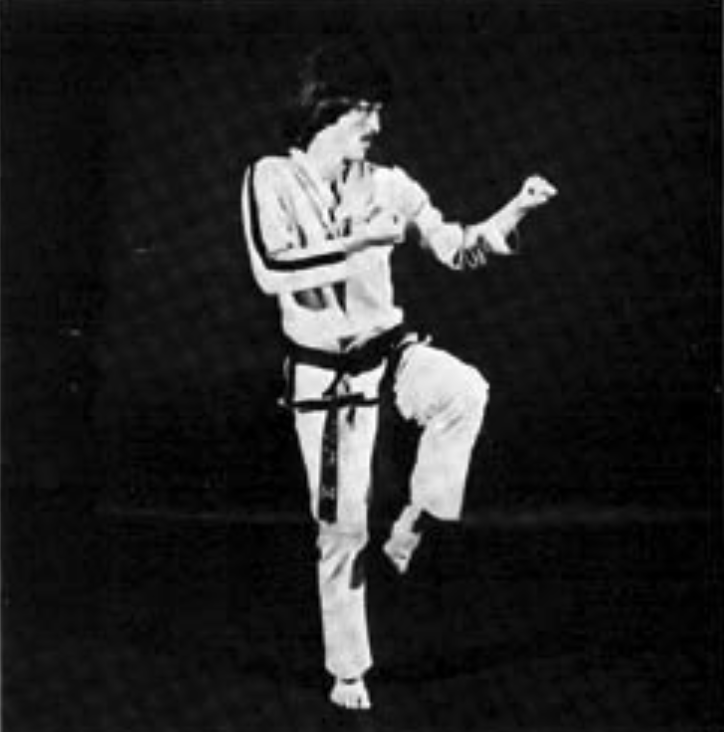
Correct
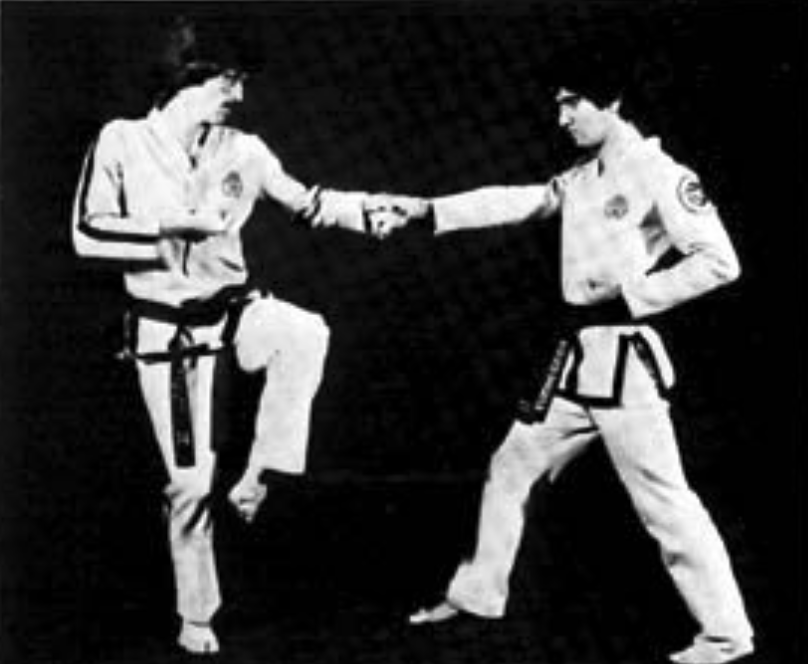
Block is possible with a palm.
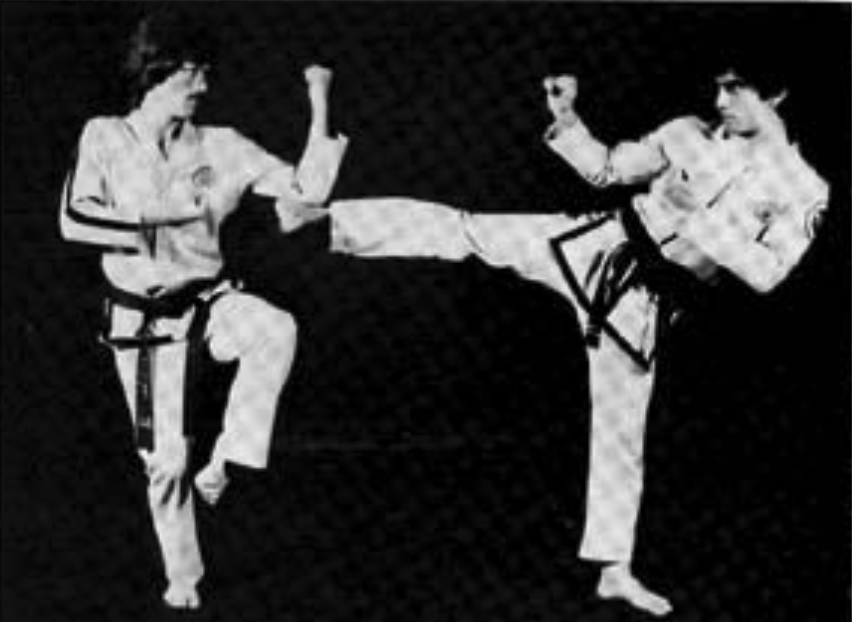
Block is possible with a straight elbow.
Incorrect
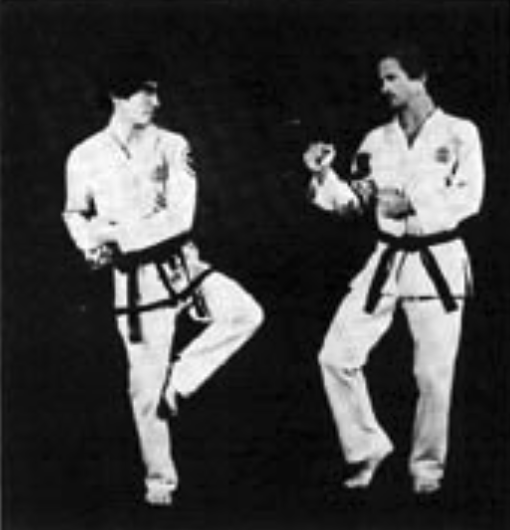
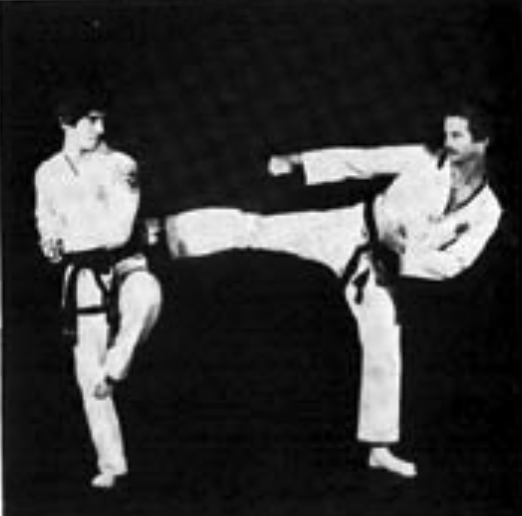
Incorrect -
Attacked by the opponent even before executing a side piercing kick.
Hard the execute a side punch with the forfeits while executing.
No defense is possible against the opponent’s attacking tool.
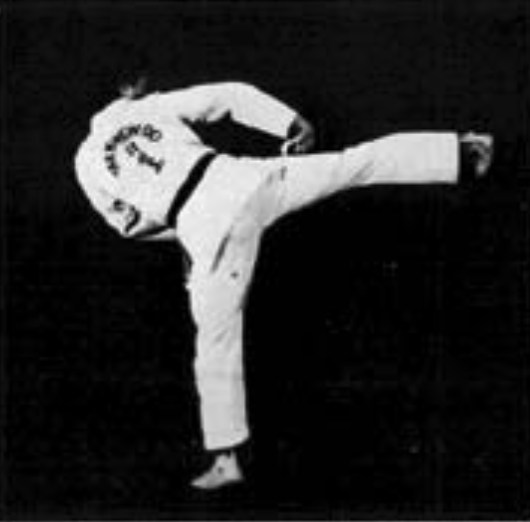
Incorrect - The heel is off the ground, therefore both the power and static balance are inhibited.
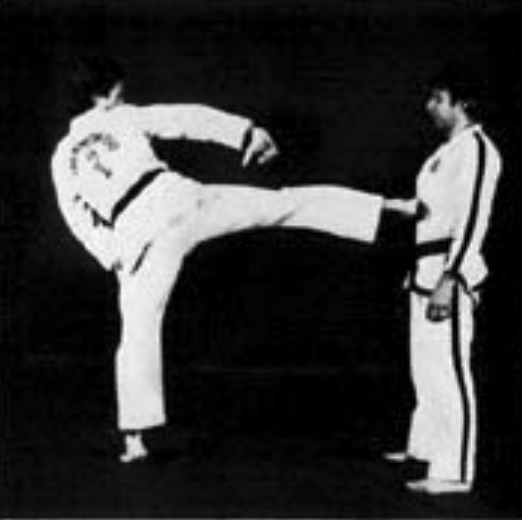
Incorrect - Body loses resistance at the point of contact.
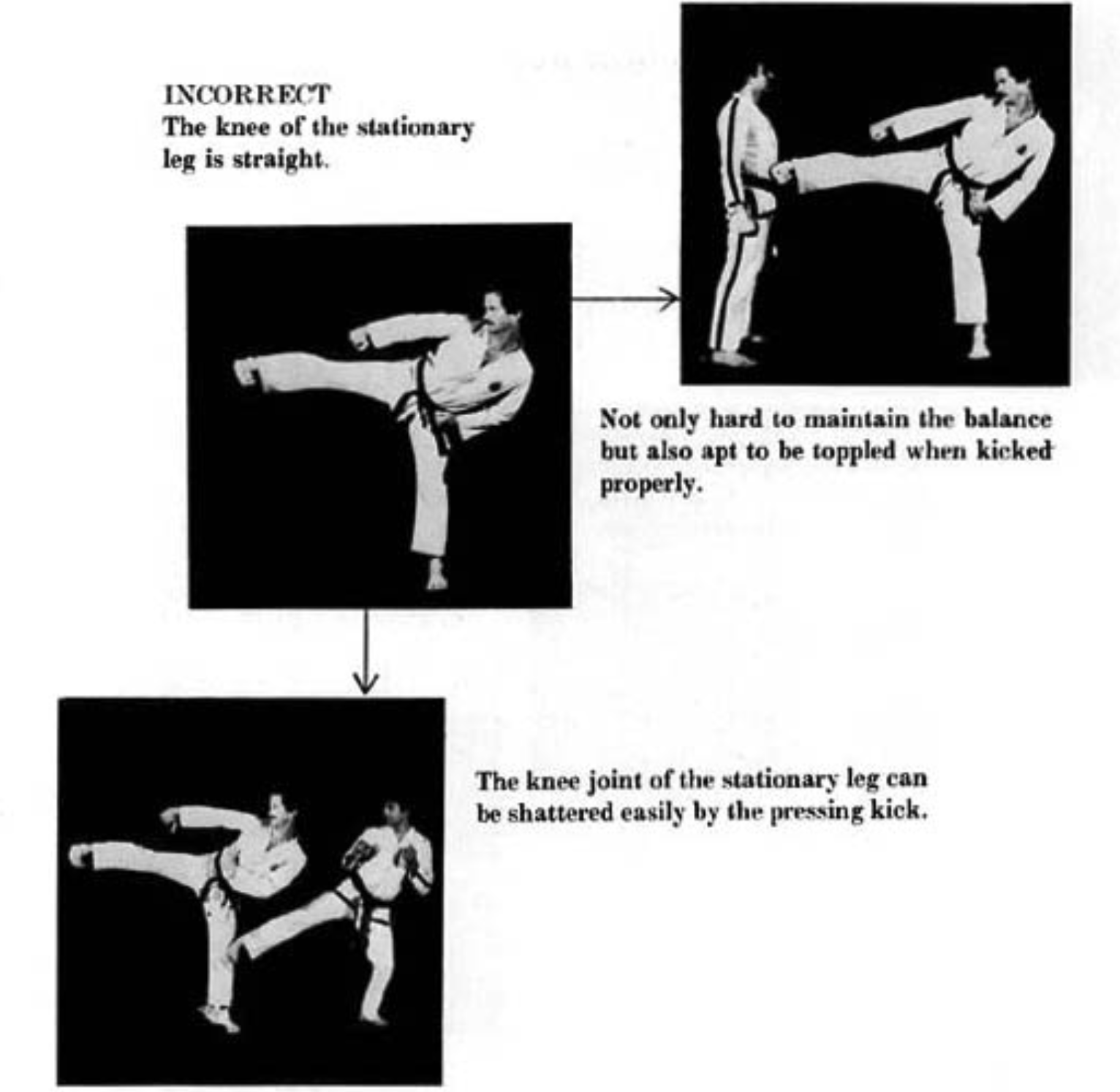
Incorrect - The attacker is off balance and can be toppled easily.
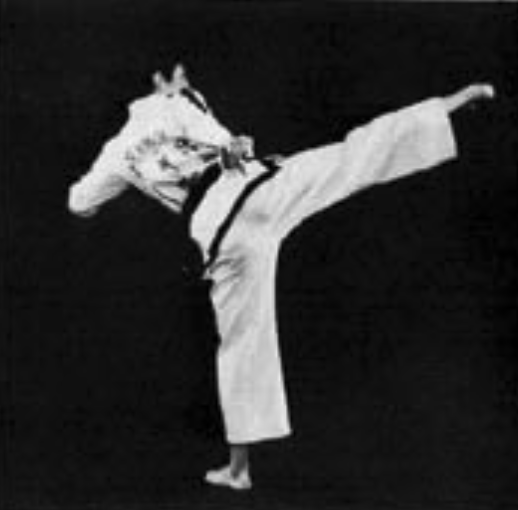
Incorrect - The arm must be kept within sight.
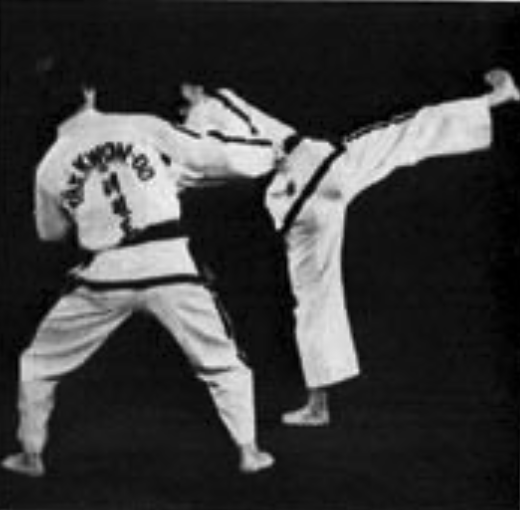
Forearm is grabbed by the opponent from the rear.
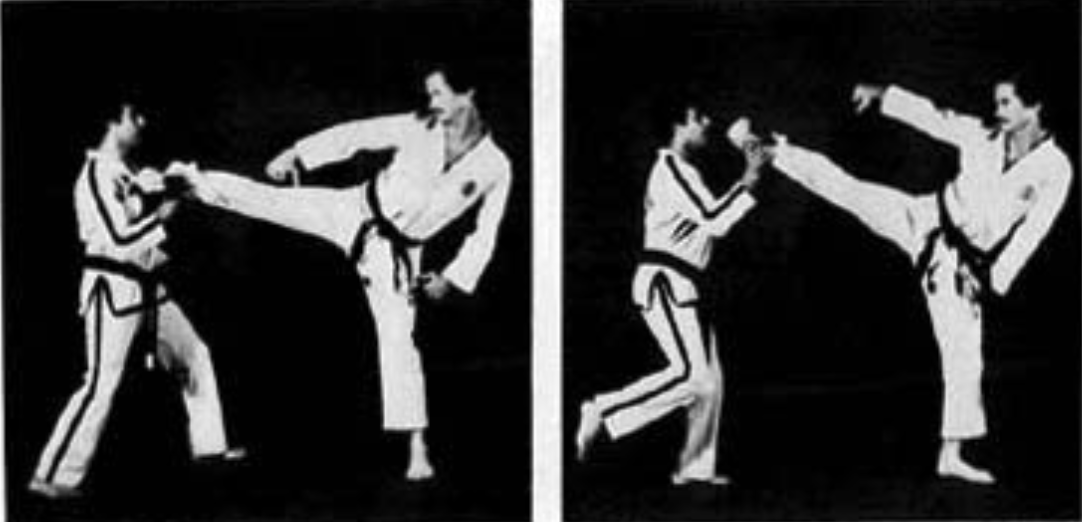
No defense is possible when grabbed.
Incorrect - The kicking foot is not brought to the stationary knee joint at the start of the kick.
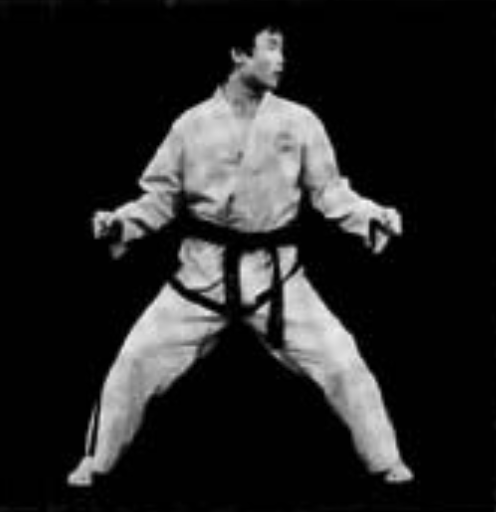
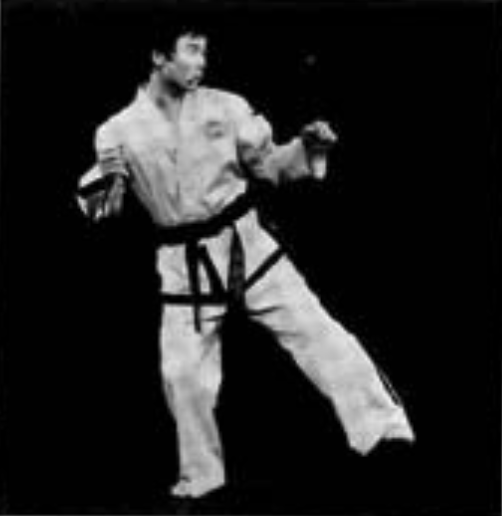
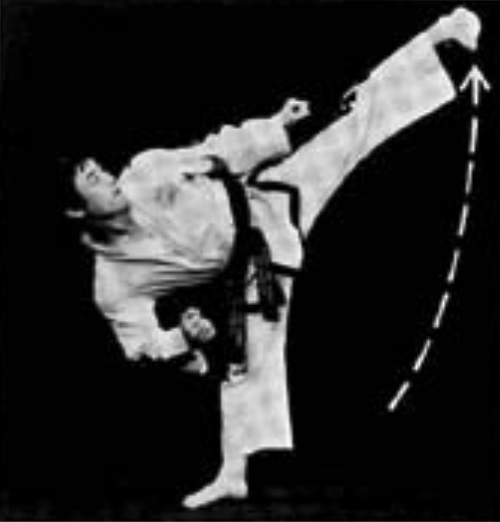
The result is a side rising kick without power.
Incorrect - The hip and abdomen have failed to jerk, because the stationary foot has not pivoted at all throughout the kick thus inhibiting power. The same thing is applicable to a side thrusting kick.
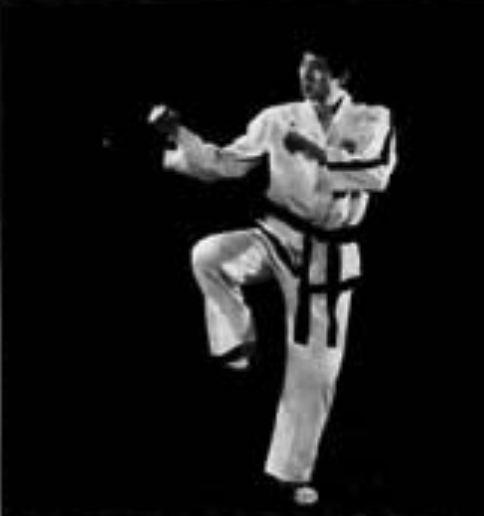
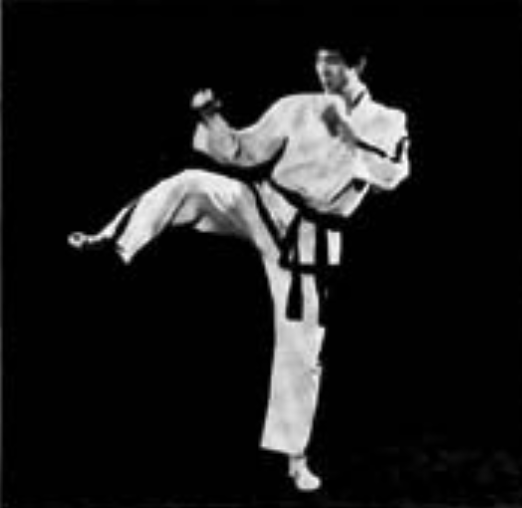
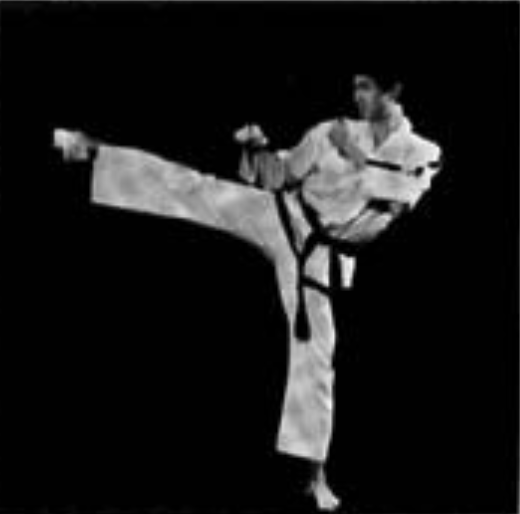
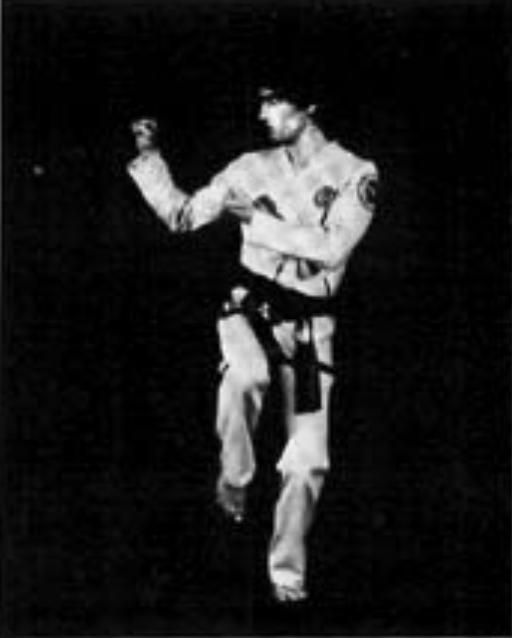
Incorrect - The ball of the kicking foot is facing the ground instead of the stationary knee joint.
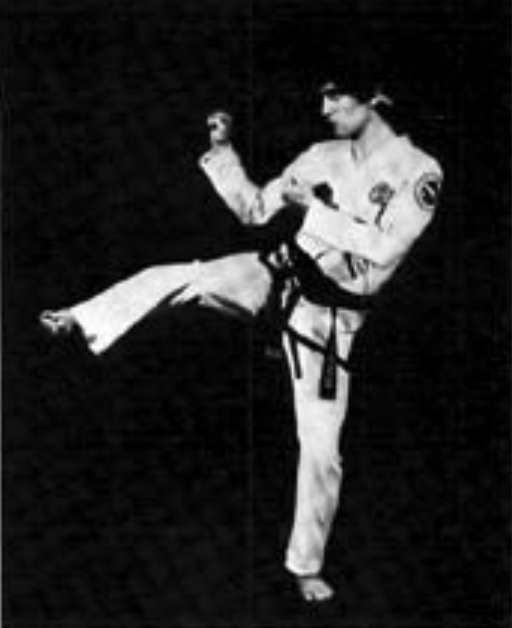
Incorrect - The foot sword reaches the target without twisting.
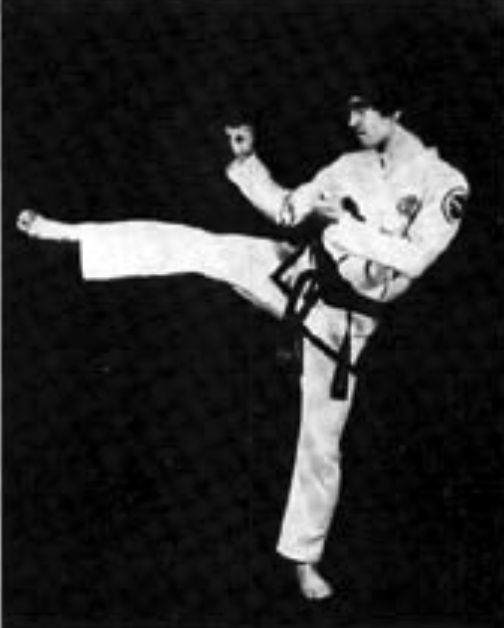
Incorrect - The point of impact is near the toe edge instead of the foot sword, thus the kick is off focus.
Incorrect - The kick is delivered to the side rear instead of the flank, prohibiting a kick with an absolutely straight leg.
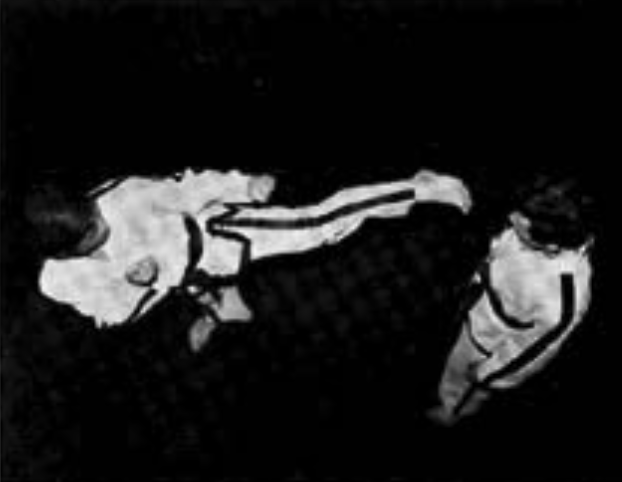
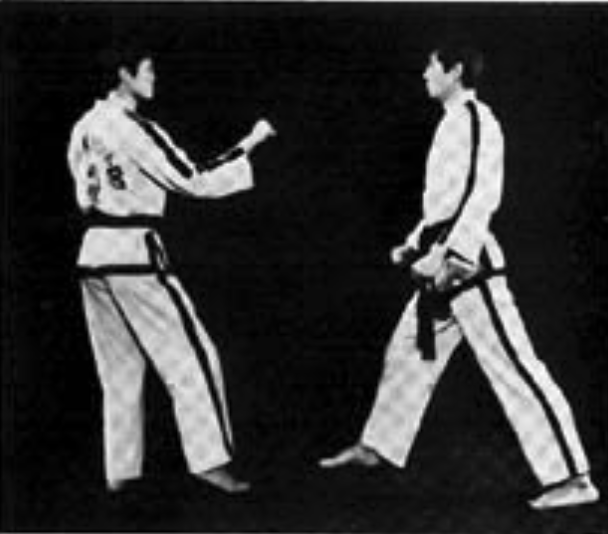
It is not desirable to use a side piercing kick against a front facing opponent.
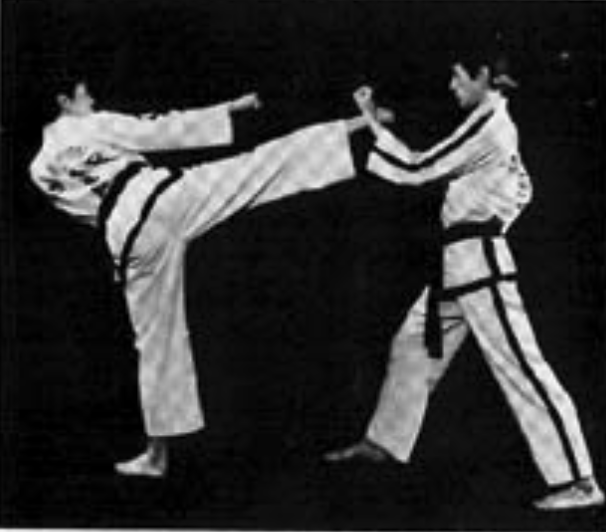
The attacking foot can be easily blocked.
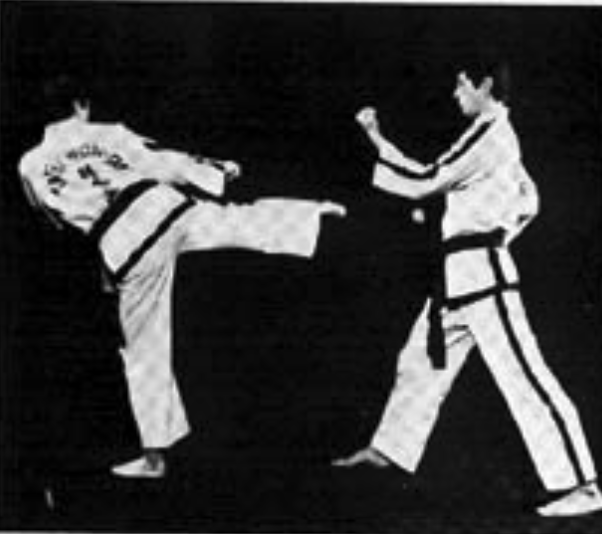
As a result, the attacker is easily toppled.
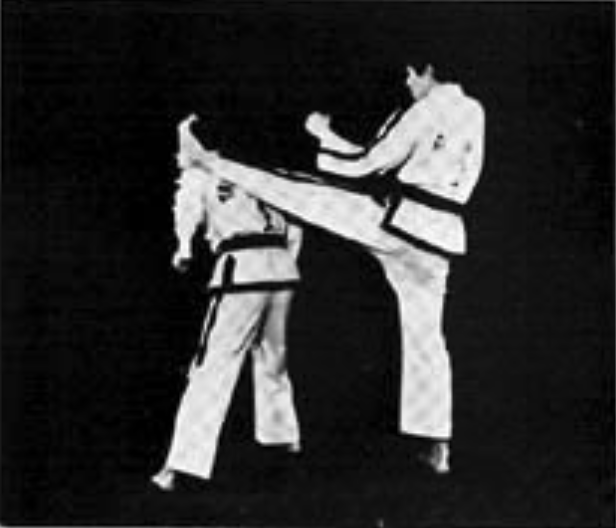
No defense is possible against a counter attack.